Wear and surface contact
Define what the part runs against and how it wears. Abrasion, grip, impact, and protection of the mating surface help guide the urethane formulation and finished geometry.
OPEN CAST POLYURETHANE
TPC manufactures custom cast polyurethane parts in Fontana, California. From rollers and wheels to bushings, pads, and protective components, we bring material selection, open casting, and machining together around the demands of your equipment.
Discuss your part Call (866) 873-8426 Watch the film
BUILT AROUND YOUR REQUIREMENTS
Define what the part runs against and how it wears. Abrasion, grip, impact, and protection of the mating surface help guide the urethane formulation and finished geometry.
Durometer is one part of the specification. Load, deflection, rebound, temperature, and chemical exposure also matter when selecting a formulation for service.
Open casting forms the component from liquid urethane. After curing, machining and finishing can be used to establish the features and dimensions your assembly requires.
THE PROCESS IN PRACTICE
A roller needs the right surface contact. A bushing must fit its assembly. Dunnage needs to support a part during handling. TPC approaches each component through its function, then develops the material and manufacturing requirements with you.
MATERIAL INTO MOTION
Shape, hardness, and the way a component meets the rest of an assembly all matter. Start with the job your part needs to do, then define the requirements with TPC.
Explore material properties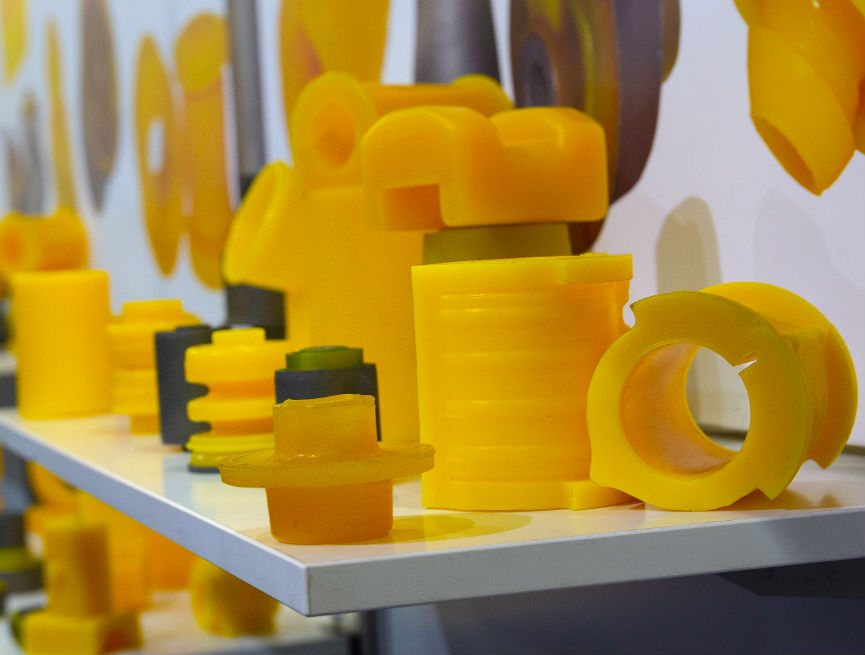
LET’S DEFINE THE PART
A drawing helps. A sample or a clear explanation of the problem is a useful starting point, too.
Include dimensions, a revision level, mating parts, and any features that control fit.
Describe load, speed, contact surfaces, temperature, and exposure to fluids or outdoor conditions.
Share an existing specification or target hardness, plus the performance issue you want to solve.
Include first-order quantity, expected repeat demand, target timing, and inspection requirements.
PROJECT QUESTIONS
In molded industrial parts, urethane is commonly used as a shorter name for polyurethane. The formulation and processing method determine the properties of the finished component.
Open casting uses liquid urethane that cures in a mold. TPU injection molding uses thermoplastic polyurethane that is melted, injected, and cooled. The right route depends on the material behavior, shape, tooling, and quantity your part needs.
Yes. A sample or worn component can help start the discussion. Tell us how it is used and what needs to improve; we will review the dimensions, material requirements, and a practical path to a replacement.
These are established for the specific part. Share your drawing, target hardness, and order quantities so TPC can review feasibility, tooling, and finishing before confirming a quote.
YOUR NEXT STEP
Bring a drawing, a sample, or a description of what your part needs to do. Talk with TPC about materials, tooling, and your next production run.
Book a meeting Prepare your project brief