Material and process fit
Begin with the intended use and material specification. Service conditions and part geometry help determine whether compression molding is an appropriate route.
PRECISION COMPRESSION MOLDING
TPC provides precision compression molding for custom components. We review the material, mold geometry, and critical dimensions together, with the finished part’s fit and function guiding the manufacturing requirements.
Discuss your part Call (866) 873-8426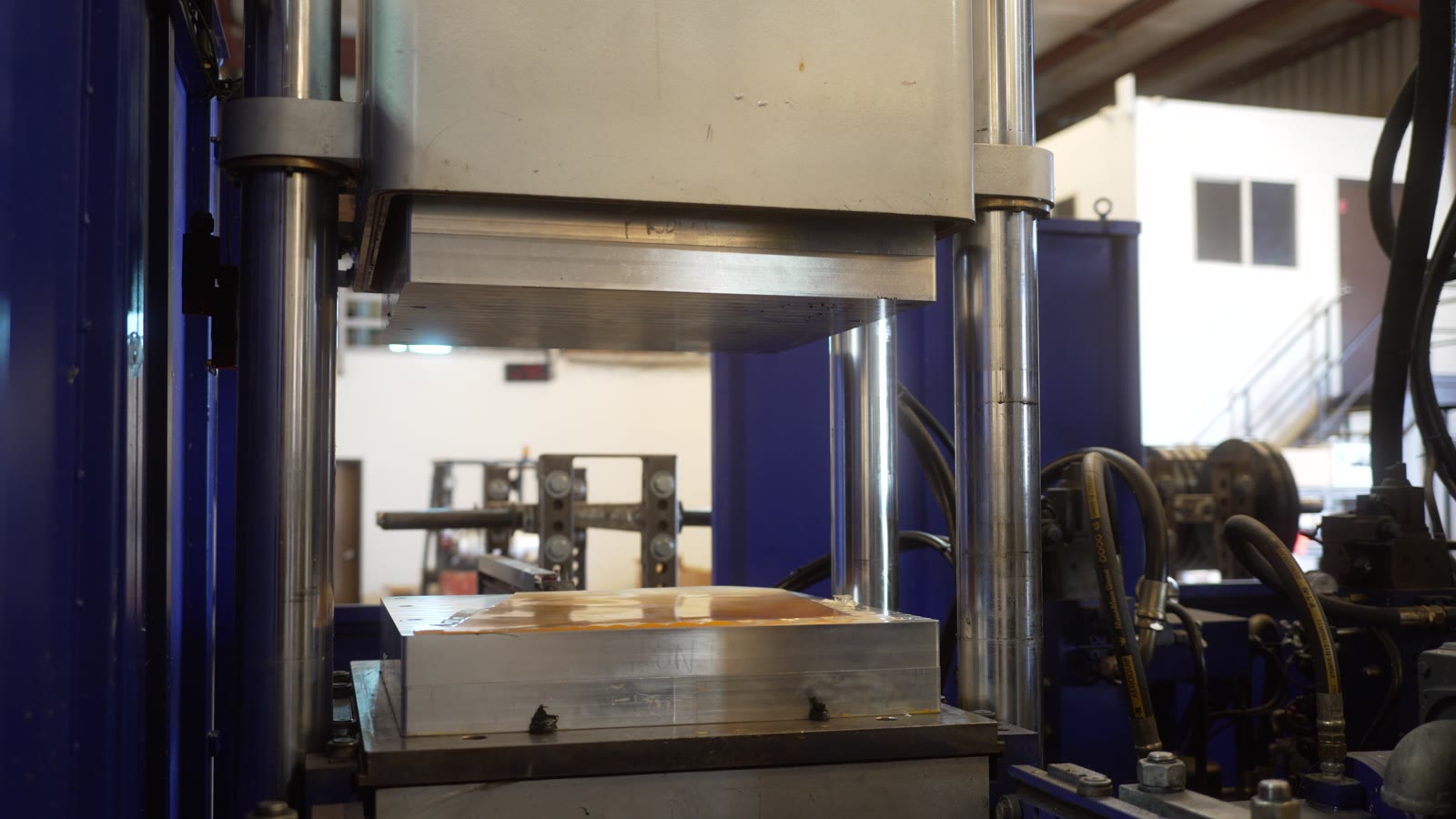 Watch the film
BUILT AROUND YOUR REQUIREMENTS
Begin with the intended use and material specification. Service conditions and part geometry help determine whether compression molding is an appropriate route.
Identify mating surfaces, section changes, and critical dimensions. Review the mold, parting line, and finishing requirements around those features.
Define the dimensions, appearance, and inspection documentation that matter before production. Those requirements provide the reference for reviewing the finished component.
THE PROCESS IN PRACTICE
Compression molding shapes material within a mold under pressure. The material and part requirements determine the process conditions. Watch the TPC press footage for a view of our shop, then talk with us about the geometry and specification of your own component.
LET’S DEFINE THE PART
A drawing helps. A sample or a clear explanation of the problem is a useful starting point, too.
Provide a drawing or sample, section details, and information about the mating components.
Include the specified material, operating conditions, and any required performance characteristics.
Identify dimensions, surfaces, appearance, and inspection requirements that affect acceptance.
Tell us about existing tooling, required quantities, repeat demand, and the target delivery schedule.
PROJECT QUESTIONS
Start with your drawing, material specification, and expected quantities. TPC will review those together with the component’s operating conditions and fit requirements.
It starts with a specific drawing and agreed acceptance criteria. Tolerances depend on the material, geometry, molding approach, and any finishing operations; they are reviewed for your part rather than assumed from a general capability claim.
A sample, sketch, or description of the function is useful for an initial discussion. Production requires an agreed part definition, including the features and requirements that control acceptance.
YOUR NEXT STEP
Bring a drawing, a sample, or a description of what your part needs to do. Talk with TPC about materials, tooling, and your next production run.
Book a meeting Prepare your project brief